How to Fix the Handoff Problem in Fulfillment Systems
May 14, 2026·3 min read
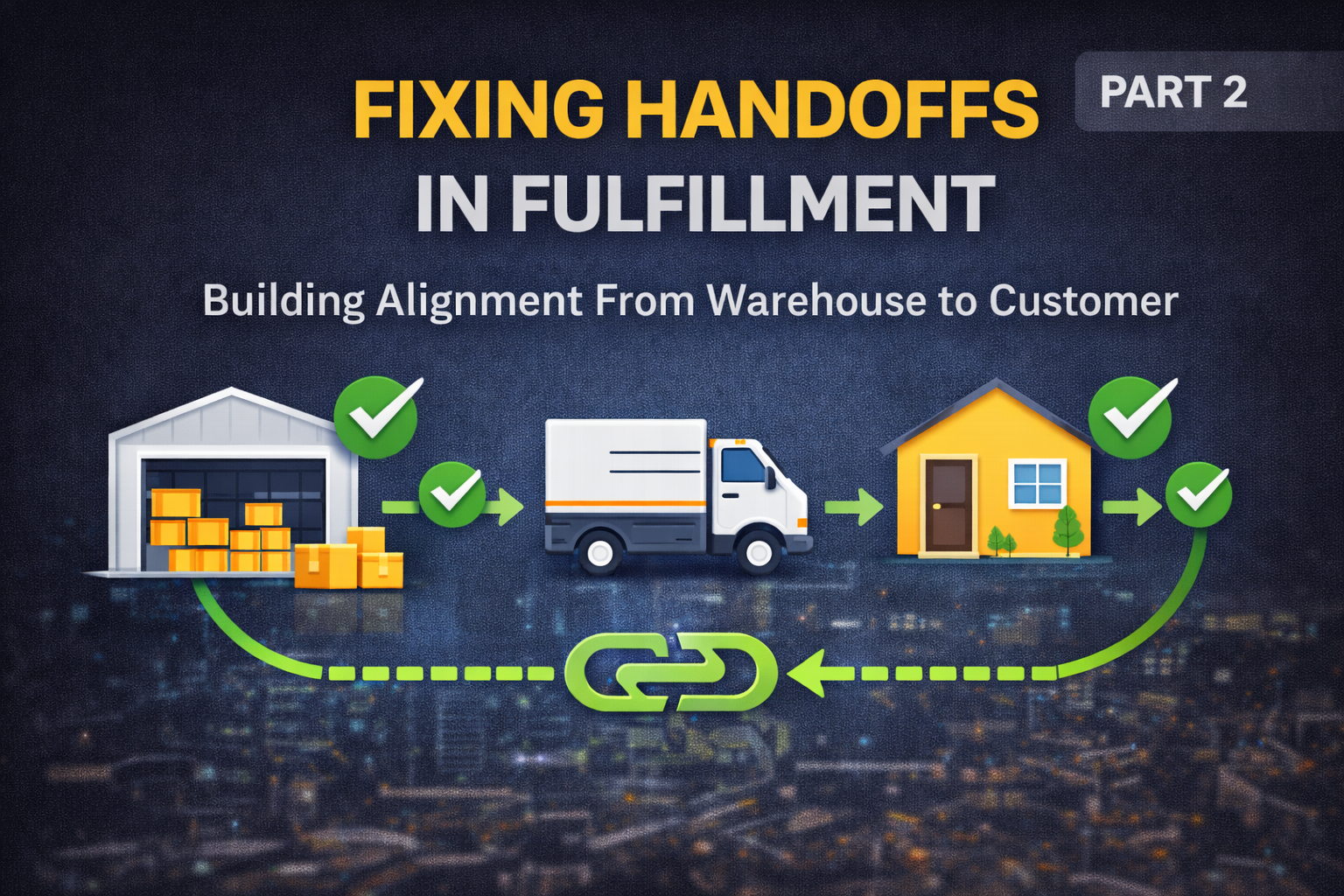
In the previous newsletter, we explored where fulfillment breaks down. It was clear that the breakdown occurs not in the warehouse, nor at delivery, but in between.Now the real question: How do you fix it? Because handoff problems are not caused by one failure. But are caused by systems that were never designed to work together.
1. Start With One Owner Per Flow — Not Per Function
Most fulfillment systems are fragmented by design:Warehouse owns pickingTransport owns movementLast mile owns deliveryBut no one owns the end-to-end flow.
Fix: Why not assign ownership to the entire journey — from order release to delivery completion.
When one team owns the flow:
- Accountability improves
- Decisions become faster
- Trade-offs are managed intentionallyWithout ownership, handoffs become blame points.
2. Design Dispatch with Delivery in Mind
Many operations optimize for: “Get it out of the warehouse fast.” Instead, optimize for: “Get it delivered successfully.” This means:◆Align dispatch timing with delivery windows◆Avoid releasing orders that overload last mile◆Batch shipments based on route logic, not just order timeDispatch is not the end of warehouse work. It is the beginning of delivery success.
3. Integrate Warehouse and Routing Logic
One of the biggest gaps is warehouse systems don’t “see” delivery constraints.
Here is how you fix that:Feed routing capacity into order release decisionsSequence picking based on route priorityAlign packing with delivery zonesWhen warehouse and routing talk to each other: You reduce:
- Rehandling
- Route inefficiencies, and delivery delays
4. Build Real-Time Feedback Loops
Most systems are one-directional: Warehouse → carrier → delivery. But high-performing systems are feedback-driven.
Create loops where:Delivery failures inform warehouse decisionsRoute delays adjust future dispatch timingException data feeds back into planningThis turns fulfillment from reactive → adaptive.
5. Standardize Handoff Protocols
Handoffs fail when expectations are assumed instead of defined. Therefore, every handoff should answer questions such as:What is being transferred?Who is responsible next?What is the expected outcome?The answers should include:
- Data completeness (addresses, contact, instructions)
- Package readiness (labeling, sorting, condition)
- Timing commitments
6. Align Incentives Across the Chain
Here is another hidden problem: Each function is optimized for its own KPI. Warehouse → speed Transport → cost Last mile → completion. These at times can create workflow conflict within the system.So, why not fix it by introducing shared KPIs:On-time deliveryFirst-attempt success rateCost per successful deliveryWhen teams win together, systems improve together.
7. Reduce Dependence on “After-the-Fact Fixes”
Many companies rely on heavily:Customer supportManual escalationReactive trackingBut by the time issues appear, the system has already failed. So, shift your focus to:
- Prevention
- Planning accuracy
- Flow alignmentThe best fulfillment systems don’t fix problems. They avoid creating them.
What This Looks Like in Practice
When handoffs are fixed:◆Fewer delivery exceptions◆Better route efficiency◆Lower operational cost◆Higher customer satisfactionNot because any one function improved — but because the system stopped breaking in between.
Final Thought
Fulfillment is not a series of steps, but a continuous flow. And flows don’t fail because of one weak point. They fail because the connections are weak. The companies that win are the ones that design systems where handoffs don’t feel like handoffs at all.
Enjoyed this nugget?
Explore more freight-tested insights and logistics stories.