Presumption vs. Ownership: A Costly Line in Global Logistics
In the fast-paced world of global logistics and customs, one unchecked assumption can derail an entire supply chain. The stakes are high — delays at borders, mounting demurrage fees, or worse, damaged client trust.
So, let’s talk about two mindsets logistics professionals often operate from: Being Presumptuous vs. Taking Ownership.
Two import coordinators receive identical shipments. One assumes the paperwork is complete and dispatches transport. The other double-checks all the documents…

Presumption holds it back.Ownership keeps freight moving.
🚨 Presumptuousness — the silent disruptor
Presumptuousness happens when a logistics or import/export coordinator acts on assumption rather than confirmation. It often stems from experience, overconfidence, or simply trying to move too fast. But even a small oversight can have major consequences.
Example:
An import coordinator assumes a shipment of auto parts from overseas has all the necessary customs documentation.
They proceed to:
- File customs entries
- Notify the client
- Schedule last-mile transport
But then— the shipment gets flagged by CBSA at the border.
Why?
- The HS code is incorrect
- There’s no Certificate of Origin
- An import permit is missing
Result? Delays. Penalties. A disappointed client.
All because someone didn’t double-check.
✅ Ownership — the professional edge
Taking ownership means being thorough, accountable, and proactive. It’s about anticipating problems and addressing them before they escalate.
Example:
Another coordinator receives the same shipment. But this time, instead of assuming, they:
- Review the HS code carefully
- Ensure all required documentation (like the Certificate of Origin) is valid
- Call the customs broker to check for permit requirements
- Inform the client early about any red flags
Result?
The shipment clears customs. No delays. The client stays informed and confident.
⚖️ Why This Matters
In logistics, the difference between ownership and presumption can mean:
- Hours lost vs. deadlines met
- Hefty fines vs. smooth clearances
- Frustrated clients vs. returning partners
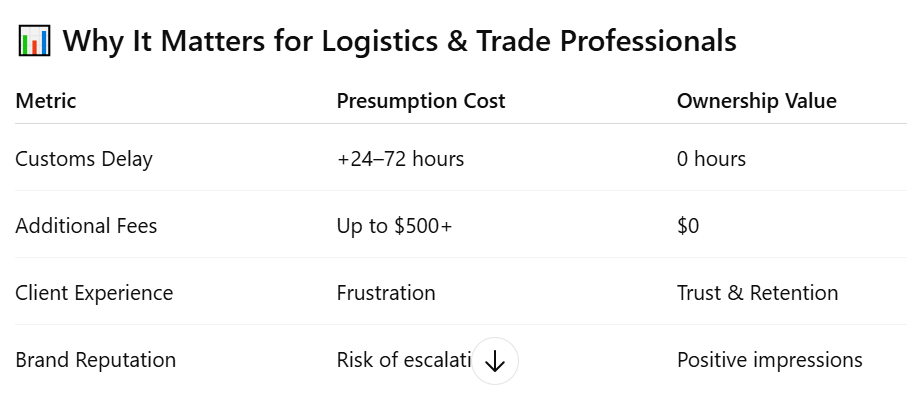
While presumption seems faster, it’s risky. Ownership, though slower, is safer and builds long-term success.
Whether you're coordinating border shipments, managing customs entries, or leading dispatch, ownership is the discipline that builds trust and keeps freight moving.
💬 What About You?
Have you ever made an assumption that cost you — or avoided one through proactive ownership?
💬 Share your story in the comments!
Let’s learn from each other.
🎙️ And if you want to hear more real-world logistics insights, subscribe to the Tales of Logistics Podcast