The Hidden Cost of Constant Rate Changes in Logistics
August 17, 2026·4 min read
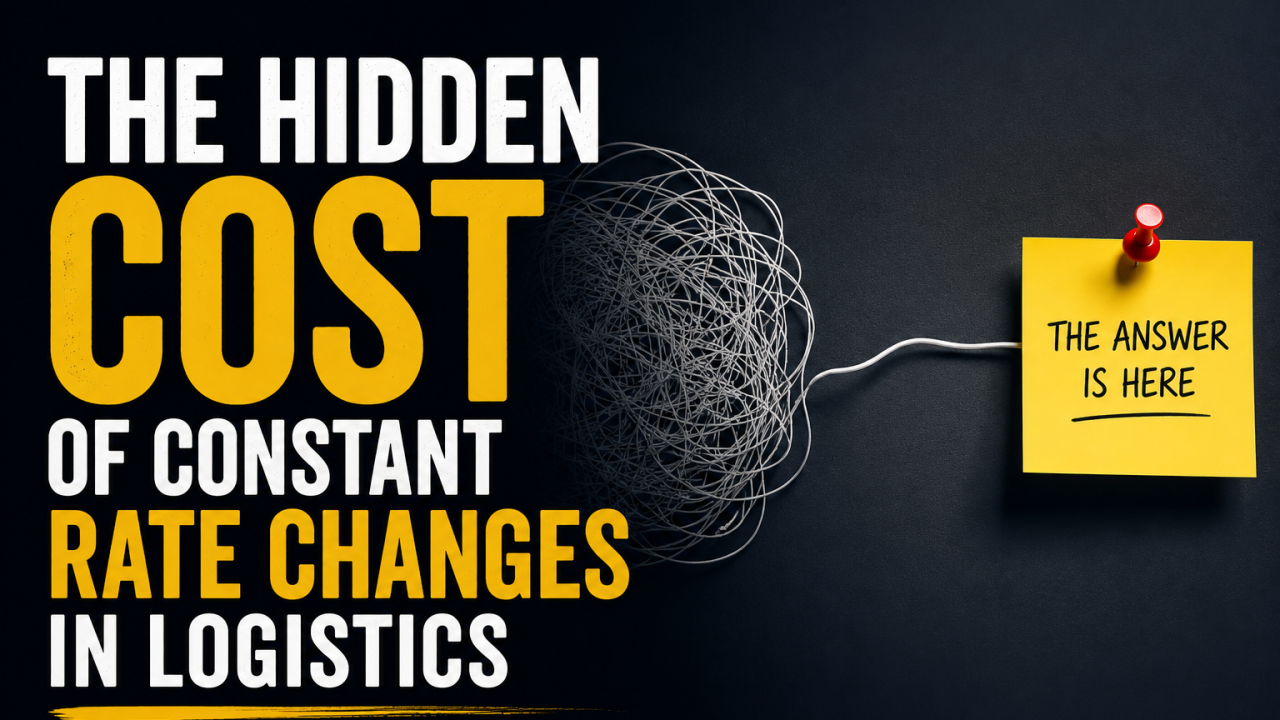
A few weeks ago, fuel prices surged. Geopolitical tensions around the Strait of Hormuz created uncertainty across global energy markets, and logistics providers found themselves facing rising transportation costs almost overnight.
Many companies responded by increasing rates or fuel surcharges. Then fuel prices eased, and rates came down. Now prices are rising again, and another round of adjustments is being discussed.
𝑭𝒓𝒐𝒎 𝒂 𝒇𝒊𝒏𝒂𝒏𝒄𝒊𝒂𝒍 𝒑𝒆𝒓𝒔𝒑𝒆𝒄𝒕𝒊𝒗𝒆, 𝒕𝒉𝒆𝒔𝒆 𝒅𝒆𝒄𝒊𝒔𝒊𝒐𝒏𝒔 𝒐𝒇𝒕𝒆𝒏 𝒎𝒂𝒌𝒆 𝒔𝒆𝒏𝒔𝒆.
But from an operational and customer relationship perspective, the situation becomes far more complicated. This is because while fuel prices fluctuate, constantly changing rates come with costs of their own. Costs that don't always appear on a balance sheet
The Reality of a Volatile Industry
Logistics has always operated in an environment shaped by factors beyond its control and then:Fuel prices move prolly because geopolitical events disrupt established trade routes.Insurance costs change.Labor markets tighten.So, we see logistics company finding ways to absorb, manage, or pass on those costs.
However, the challenge is determining how much volatility should be transferred downstream, because while the market may change weekly, customers still need stability.
The Internal Impact Nobody Talks About
Every pricing adjustment triggers a chain reaction inside the organization, because operations teams must then need to:Learn new ratesUpdate quotesReadjust spreadsheets and systemsRecalculate shipmentsCustomer service teams must:
- Answer questions
- Explain increases
- Resolve billing concerns
Sales teams must:
- Defend pricing decisions
- Manage customer expectations
- Protect relationships
Finance teams must:
- Update calculations
- Monitor margins
- Ensure consistency
So, you see, one rate change may seem small, but multiple changes over a short period create operational friction. And friction is expensive.
A Familiar Scenario
Imagine a customer receiving three different pricing updates within a few months. First, a fuel surcharge increase. Then a reduction when fuel prices soften. Then another increase when prices rise again.
Eventually the customer begins asking a different question. Not "Why did the rate change?" But "What will my cost be next month?". The concern is no longer the amount, but now about predictability. And predictability is one of the most valuable things logistics providers can offer.
Why Stability Matters to Customers
Most customers understand that costs change. Procurement professionals also understand fuel markets, and business owners understand economic uncertainty. But what creates frustration is not necessarily the increase itself, it's the inability to plan around it.
Businesses rely on predictable transportation costs to supportBudget planningInventory decisionsCustomer pricingContract negotiationsForecastingSo when logistics costs fluctuate frequently, planning becomes harder for everyone involved.
The Pricing Whiplash Problem
Frequent adjustments can also create a form of pricing fatigue internally and externally. Internally, teams become overwhelmed by constant updates. Externally, customers become uncertain about future costs.
The result is often:Longer conversationsMore quote revisionsIncreased administrative workMore customer questionsGreater pressure on frontline staffAnd in some cases, the operational effort required to manage frequent changes begins to offset the financial benefits they were intended to create.
When Being Technically Correct Isn't Enough
A logistics company may be fully justified in adjusting rates. But customers don't experience pricing through spreadsheets. They experience it through relationships.
The most successful logistics providers understand that pricing is not just about recovering costs, but about maintaining confidence.
A customer who trusts your pricing strategy is far more likely to remain loyal during periods of volatility.
What More Resilient Companies Are Doing
Rather than reacting to every market movement, many organizations are adopting more structured approaches like.1.Fuel Adjustment Bands: Instead of adjusting rates every time fuel moves, changes occur only when predefined thresholds are reached.2.Scheduled Reviews: Monthly or quarterly reviews create predictability for both customers and internal teams.3.Transparent Formulas: Customers understand exactly how surcharges are calculated and when changes occur.4.Longer-Term Agreements: These balance flexibility with stability and reduce administrative complexity. This is because the goal is not to eliminate volatility, not to manage it more effectively.
The Leadership Challenge
Every logistics leader faces the same difficult question:◆How much market volatility should the company absorb?◆And how much should be passed on to customers?Absorb too much and margins suffer. Pass through every fluctuation and relationships may suffer.
Whilst it is true that finding the right balance is not easy, it is also true that it is increasingly becoming a competitive advantage.
The Strategic Shift
For years, logistics companies focused heavily on operational efficiency. But today, another capability is becoming just as important - Pricing stability.
This is not because markets are stable, but because customers value partners who can help create stability within unstable environments.
Sometimes the most valuable service a logistics provider offers are predictability, and not just transportation.
Final Thought
Fuel prices will continue to rise and fall. Geopolitical disruptions will continue to create uncertainty. Markets will continue to move. Those realities are unlikely to change.
But while companies cannot control every external event, they can control how they respond because pricing is more than a financial decision.
Pricing is a communication strategy, an operational strategy. And most importantly, it is a trust strategy. In logistics, customers rarely remember every surcharge adjustment. They however remember whether doing business with you felt predictable when everything else was uncertain.
Enjoyed this nugget?
Explore more freight-tested insights and logistics stories.