Too Busy to Improve: Why Logistics SMEs Keep Delaying the Systems They Need Most
May 29, 2026·4 min read
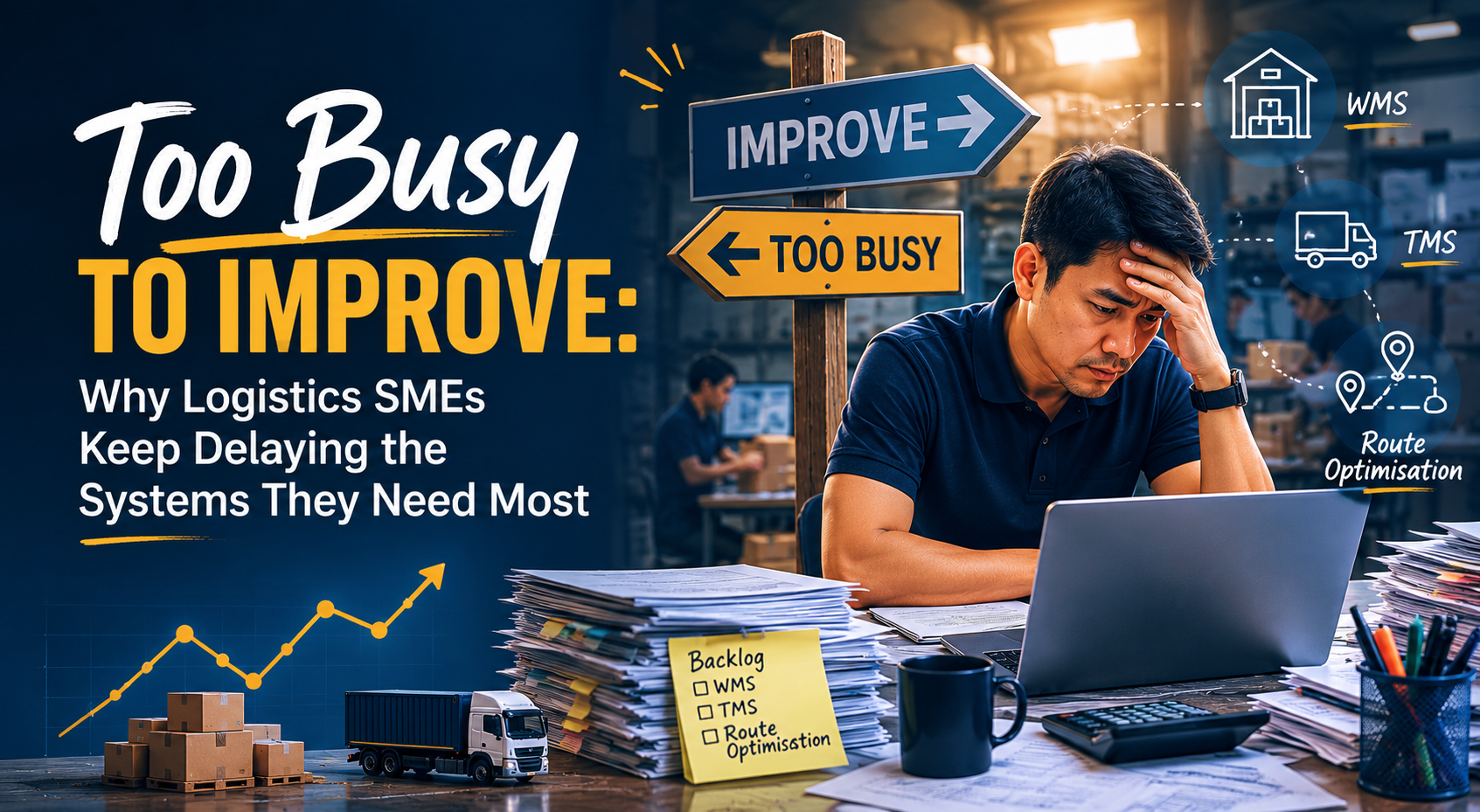
There is a conversation happening in logistics companies every day that rarely makes it into boardroom presentations. It usually sounds something like this:
"We know we need a TMS."
"We should probably look at route optimization software."
"A WMS would solve a lot of these issues."
And then comes the conclusion:
"Let's revisit it later."
For many logistics SMEs, technology adoption isn't being rejected. It's being postponed. Not because leaders don't see the value, but because the business is too busy surviving today's operational demands to focus on tomorrow's operational improvements. And that's where the growth trap begins.
The Paradox of Growth
Most people assume companies delay technology because business is slow.
In reality, many logistics companies delay technology because business is busy, volumes are increasing, customers are demanding faster service, dispatchers are overloaded, and warehouse teams are stretched.
The last thing management wants to do is introduce another disruption. Ironically, these are often the exact conditions that signal a company has outgrown its current systems.
The Fear Behind the Delay
Most SME operators aren't afraid of software. They're afraid of what implementation might do to an already busy operation. Questions start appearing:What if productivity drops during rollout?What if employees resist the change?What if drivers don't adopt it?What if customers are affected during implementation?What if we spend the money and don't get results?Of course, these concerns are valid because technology projects do require time, effort, and commitment. But avoiding the project doesn't eliminate the problem. It simply postpones the solution.
A Familiar Logistics Scenario
Imagine a growing courier company operating 15 vehicles. The dispatch team manually plans routes every morning, drivers constantly call in for updates, and the customers regularly request delivery status. This operation flow works, only because people are working harder to compensate for system limitations.
Upon review, management recognizes the need for route optimization software. The benefits seem obvious:◆Better route planning◆Improved delivery density◆Lower fuel consumption◆Better customer communicationHowever, implementation keeps getting delayed because the company is entering peak season, volumes are rising, and the team is already busy. So, the decision is pushed into the future. Six months later, the fleet has grown, delivery volume has increased, and the dispatch team is even more overwhelmed.
The same software is still needed. But now the difference is that implementation has become more complex, more urgent, and more expensive.
The Hidden Cost Nobody Measures
Most companies carefully evaluate:Subscription feesSetup costsTraining expensesIntegration costsBut few calculate the cost of waiting. That cost often includes:
- Manual planning hours
- Repetitive administrative work
- Routing inefficiencies
- Missed capacity opportunities
- Service inconsistencies
- Employee burnout
The challenge is that these costs don't appear on a software proposal. They appear slowly over months and years which makes them easier to ignore.
The Human Side of the Problem
Technology discussions often focus on systems. But implementation is ultimately about people.
A dispatcher who has spent years manually building routes may feel uncertain about automation, or warehouse staff may worry that a new WMS will complicate familiar workflows. Or even the drivers may resist new processes simply because they are comfortable with existing ones.
This resistance doesn't necessarily come from unwillingness. It often comes from uncertainty. The companies that succeed with technology adoption understand that they don't just implement software. They manage change.
Why Waiting for the Perfect Time Doesn't Work
Many organizations tell themselves they will implement once:Volumes stabilizePeak season endsHiring is completeBudgets improveOperations become less busyThe problem is that logistics rarely becomes less busy. This is because:
- New customers arrive.
- Markets change.
- Disruptions happen.
- Demand shifts.
The perfect implementation window often never appears.
What Successful SMEs Do Differently
The most successful logistics SMEs rarely transform everything at once.
Instead, they:Start with one operational pain pointRun a pilot programTrain a small group firstMeasure results before expandingThey don't wait for perfect conditions. But create manageable conditions. Technology adoption becomes a series of small improvements rather than one massive disruption.
Technology Is Not the Goal
Many companies' approach software as the objective. It isn't!
The objective is:Better visibilityBetter planningBetter customer serviceBetter utilization of resourcesBetter scalabilitySoftware is simply one of the tools that helps achieve those outcomes. So, the focus should never be on buying technology but should be on removing operational friction.
The Strategic Shift for Logistics SMEs
The question is no longer "Can we afford to implement this?". The more important question may be "Can we afford another year operating without it?"
Because every growing logistics business eventually reaches a point where effort alone can no longer compensate for process limitations. And when that happens, technology stops being an optional improvement. It becomes operational infrastructure.
Final Thought
Many logistics SMEs are not struggling because they lack ambition. They are struggling because growth has created complexity faster than their systems can handle. The challenge is that the very pressures that justify investing in better technology are often the same pressures that delay it.
But complexity rarely solves itself. And in logistics, the longer operational friction remains, the more expensive it becomes. Sometimes the biggest risk isn't implementing a new system. It's waiting too long to do it.
Enjoyed this nugget?
Explore more freight-tested insights and logistics stories.