When Costs Spike Overnight: How Logistics Companies Can Renegotiate Without Losing Clients
March 24, 2026·3 min read
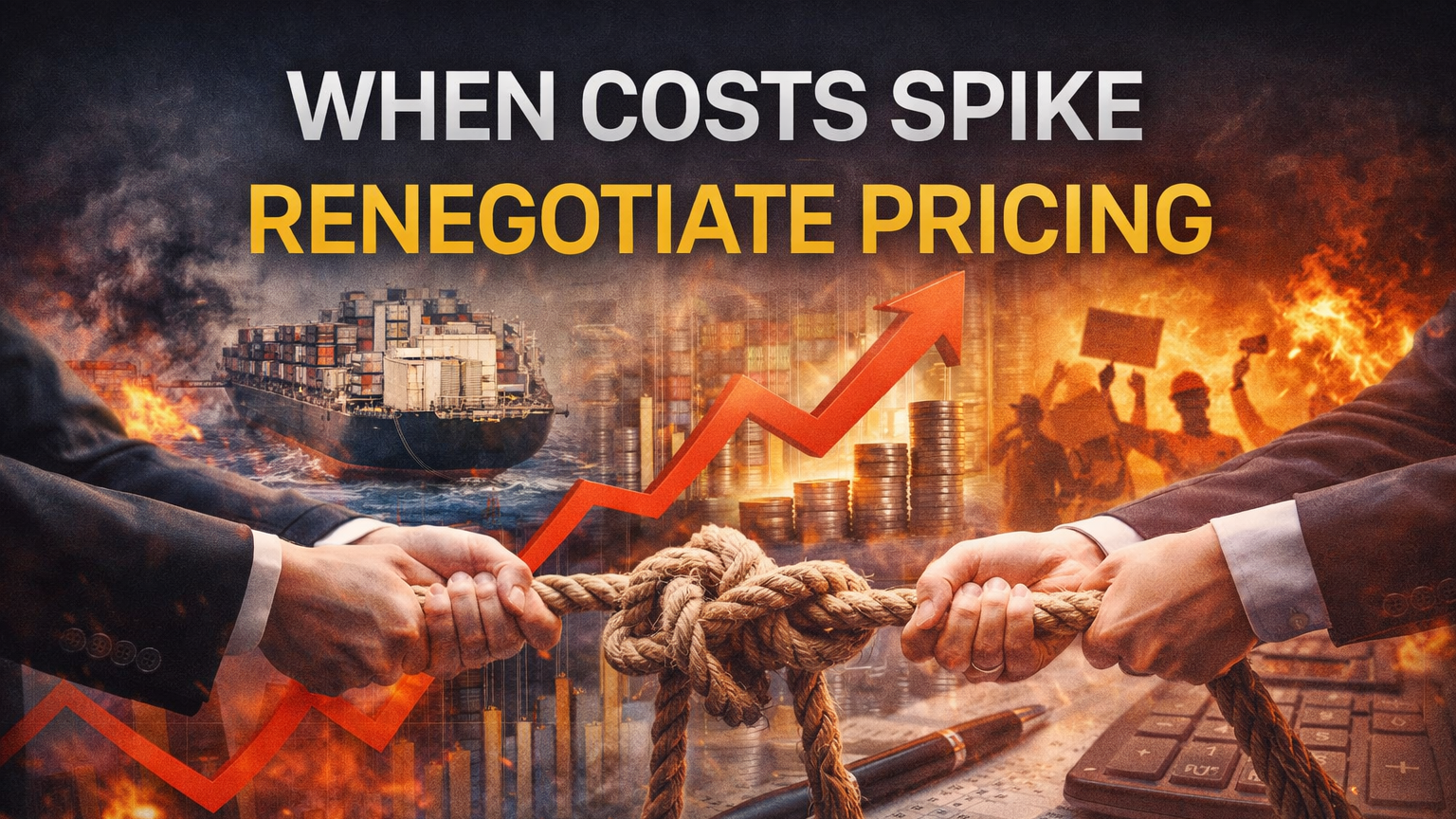
In logistics, pricing rarely fails in calm conditions. It fails under pressure. Pressure that can come from a geopolitical shock, or a disrupted corridor like the Strait of Hormuz. And suddenly, cost structures shift — fast.
Fuel surcharges rise. Transit risks increase, and insurance premiums adjust. But your contracts? They’re still based on yesterday’s assumptions.
This is where many logistics companies face a difficult choice: Are we gonna absorb the cost and protect the relationship — or pass it on and risk losing the client.
The truth is, neither extreme works long-term. The real skill lies in renegotiating under pressure without damaging trust.
Why Pricing Conversations Break Down
When disruptions hit supply chain flow, pricing discussions often become reactive.
Logistics providers quickly:
◆Rush to inform clients of increases◆Focus on internal cost pressure◆Communicate urgency without structure
Clients, on the other hand:
- See unexpected cost increases
- Question justification
- Worry about budget impact and start to compare alternatives. Sadly, what should be a shared problem becomes a negotiation conflict.
So, what should you do?
Step 1: Anchor the Conversation in Data, Not Emotion
The fastest way to lose credibility is to say: “Costs have gone up.”
But the strongest way to open the conversation is: “Here’s what has changed, and how it impacts the lane.”
Break it down clearly:Fuel cost movement (%)Route disruption impact (distance/time)Carrier/insurance adjustmentsPort or transit constraints
Transparency builds alignment. So, when clients see the mechanics, not just the outcome, resistance drops.
Step 2: Separate Temporary Shock from Structural Change
Not all disruptions are equal. Clients need clarity on:◆What is temporary (fuel spikes, short-term congestion)◆What is structural (route shifts, long-term geopolitical risk)This allows you to propose:
- Temporary surcharges
- Time-bound adjustments
- Review checkpoints
Without this distinction, clients assume every increase is permanent.
Step 3: Offer Options, Not Ultimatums
A single price increase feels like pressure. But options feel like control. So instead of: “Rates are increasing by X%, why not offer:Standard service with revised pricingSlower/alternative route at lower costFlexible delivery windowsConsolidated shipments to reduce frequencyThis shifts the conversation from price increase → cost management strategy.
Step 4: Protect the Relationship, Not Just the Margin
Short-term margin protection can damage long-term revenue.
Strong logistics partners:◆Share part of the burden when possible◆Avoid sudden, unexplained changes◆Communicate early, not after losses accumulateClients always remember not just what you charged — but how you handled pressure.
Step 5: Build Pricing Flexibility into Contracts (Before the Next Disruption)
The best negotiation happens before the crisis. Forward-thinking companies build:Fuel adjustment clausesDynamic pricing triggersIndexed surcharge mechanisms review structuresThis turns future renegotiation into pre-agreed logic, not confrontation.
Step 6: Align Procurement and Operations Internally
At times negotiation failures start inside the company. This happens when various departments don't align in pricing structure. For instance, sales promise fixed pricing while operations face variable cost.
This misalignment creates:
Margin erosionEmergency renegotiation, and client frustrationProcurement, sales, and operations must align on in pricing structure and determinants. What is fixed What is variable What triggers change.
The Strategic Mindset Shift
Disruptions like fuel spikes or corridor instability are no longer rare events. They are part of the operating environment. The companies that handle pricing best don’t just react — they design systems that adapt without breaking relationships.
In logistics, pricing is not just about cost recovery. It is about:TransparencyTrustCommunicationShared problem-solvingBecause when disruptions hit, clients don’t just evaluate your rates — they evaluate your reliability as a partner.
Enjoyed this nugget?
Explore more freight-tested insights and logistics stories.