Why Human Dispatchers Still Outperform AI
July 17, 2026·3 min read
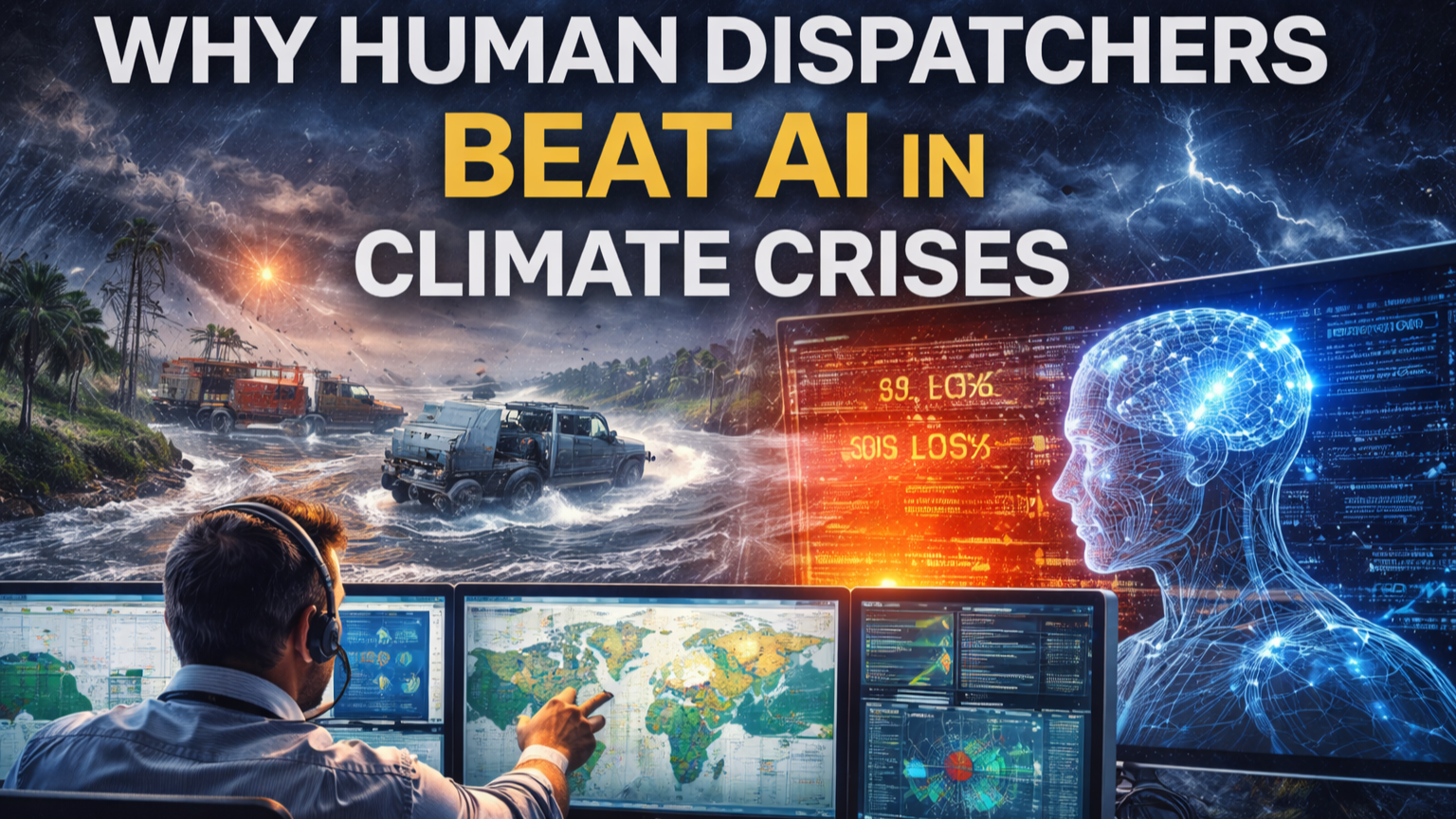
AI thrives on patterns. But Logistics crises destroy them when they occur. For instance, a category-five hurricane doesn’t just disrupt routes. It disrupts assumptions.
When these crises occur, ports shut down, road networks collapse, communication breaks and priorities shift in real time. Suddenly, the data that AI depends on becomes incomplete, delayed, or irrelevant.
This is where something interesting happens. Human dispatchers take the lead.
When Optimization Stops Working
In normal conditions, AI excels:◆Route optimization◆Cost efficiency◆Predictive planning◆Demand forecastingBut all of these rely on one thing - Stable, reliable data environments. During climate crises:
- Historical patterns no longer apply
- Real-time data is fragmented
- Conditions change faster than systems can adapt
The “optimal route” may no longer exist.
What Human Dispatchers Do Differently
Experienced dispatchers don’t just process data. They interpret situations.
They ask:
Which routes are actually usable, not just available on a map?Which carriers are still operational despite system outages?Which clients need priority based on urgency, not contract value?They make decisions with:
- Partial information
- Time pressure
- Operational ambiguity.
This is not optimization. It is judgment based on experience and ground knowledge.
Intuition Built From Experience
A seasoned dispatcher recognizes patterns AI cannot quantify:Early signs of infrastructure failureCarrier reliability under stressRegional behavioral dynamicsInformal communication networksThey rely on phone calls. Relationships. Instinct built over years of disruptions, and in crises, these become more valuable than dashboards.
Negotiation Under Pressure
Climate disruptions turn logistics into negotiation.
Dispatchers must:Reallocate limited capacityNegotiate priority with carriersManage client expectations in real timeBalance fairness with urgencyYes, AI can recommend routes, but it cannot negotiate human constraints.
The Moral Layer AI Cannot Handle
In crisis scenarios, decisions are not purely operational, but often involve trade-offs like:Critical medical shipments vs commercial goodsSafety of drivers vs delivery commitmentsShort-term losses vs long-term relationshipsThese are not optimization problems. They are judgment calls. And judgment requires context, empathy, and accountability and understanding.
Where AI Still Matters
This article is not a rejection of AI. Infact AI remains critical for:Pre-crisis planningScenario modelingNetwork visibilityPost-crisis recovery analysisBut when disruption occurs, AI shifts from decision-maker → support tool.
The Real Lesson for Logistics Companies
The goal of this article is not Human vs AI, but how Human + AI can be correctly positioned.AI handle's structureHumans handle uncertaintyCompanies that rely solely on automation in volatile environments risk operational paralysis.
However, records have shown that those that invest in both technology and human expertise build true resilience.
The Strategic Shift
Every year, climate-related disruptions continue to increase:HurricanesFloodingDroughtsExtreme weather volatilityThese are not rare events anymore. They are now part of the operating environment, and resilience will not come from better algorithms alone; but from better systems, better planning, and better human decision-making under pressure from experienced dispatchers or logistics operators.
Final Thought
In stable conditions, systems win. While in unstable conditions, people do. The future of logistics will not be defined by who automates the most — but by who knows when not to rely solely on automation.
Enjoyed this nugget?
Explore more freight-tested insights and logistics stories.